
EXPLORE THE RESERVE
Explore Sterkfontein Dam Nature Reserve
AT A GLANCE
Sterkfontein Dam Nature Reserve is a protected area of about 18,000 hectares near Harrismith in the eastern Free State, South Africa. It surrounds Sterkfontein Dam, completed in 1977 and commonly listed as the third-largest dam in the country by volume. The reserve sits in the foothills of the northern Drakensberg, close to the KwaZulu-Natal border, and is known for fly fishing, sailing, vulture birding and wide mountain views.
A dam that keeps Gauteng’s taps running
Sterkfontein is the storage heart of the Tugela-Vaal Water Project. Water is pumped up from the Tugela River system in KwaZulu-Natal and held here as a strategic reserve, then released into the Vaal system when Gauteng needs it. Because it is managed as a reserve, the dam stays close to full all year, so there are no drought-season mudflats. The water is famously clear. From end to end it stretches about 18.8 km across a surface of roughly 69 km².
18.8 km
69 km²
1977
About, end to end
Roughly, water surface
Year completed

Landscape and plants
Rugged mountains, deep kloofs and open grassland define the reserve. In the sheltered kloofs grow yellowwood, wild peach, silky bark and bush guarri, with wild grape climbing into the canopy. The higher slopes carry highveld protea, silver sugarbush, wild myrtle and the scarce tree fern. Summers bring the rain, between 750 and 1,400 mm a year; winter nights are cold but the days are usually sunny and clear.
Wildlife
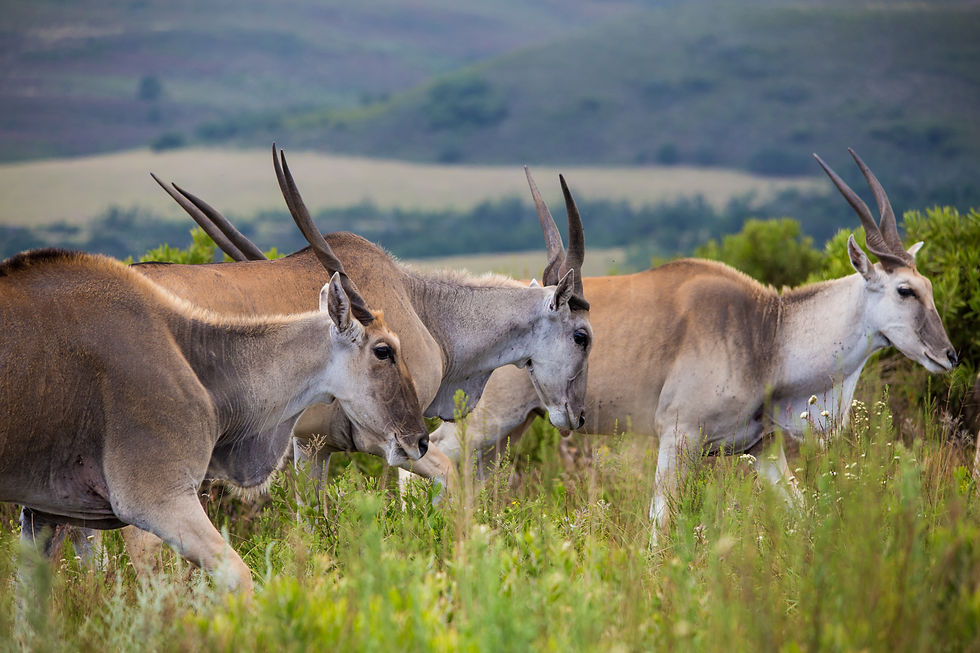
Look out for mountain reedbuck, common reedbuck, grey rhebok, eland and blesbok on the grassy slopes, with zebra, springbok and black wildebeest often seen along the reserve roads. About 10 km of tourist roads allow easy self-drive game viewing.
Mountain reedbuck
Grey rhebok
Blesbok
Eland
Zebra
Springbok
Birds of prey and highland specials
The cliffs around the dam are prime raptor country. Cape vultures soar overhead alongside black (Verreaux’s) eagles and martial eagles, while secretarybirds stride the grassland. The rare bearded vulture is an occasional visitor. Keen birders also come for the southern bald ibis, blue korhaan, white-bellied korhaan, buff-streaked chat, ground woodpecker and sentinel rock thrush.
Cape vulture
Black eagle
Secretarybird
Bearded vulture
Southern bald ibis
On foot, by car and on the water
Walk the reserve’s trails, drive about 10 km of game-viewing roads, or take to the water for fly fishing, sailing and kite-boarding.

When to visit
SEPTEMBER TO NOVEMBER
Spring
Wildflowers, warming days and birds nesting.
DECEMBER TO FEBRUARY
Summer
Green hills, dramatic afternoon storms and the best watersport weather.
MARCH TO MAY
Autumn
Calm, golden and mild; ideal for hiking and photography.
JUNE TO AUGUST
Winter
Frosty nights, clear sunny days and the sharpest mountain views, sometimes with snow on the peaks.
Beyond the reserve
Golden Gate Highlands National Park
Golden Gate Highlands National Park and its sandstone cliffs are about 1.5 hours away, approximately 70 km (43 mi) from Qwantani.
Sentinel car park
Where the Amphitheatre hike starts, about 2 hours away, approximately 75 km (47 mi) from Qwantani. It is one of the Drakensberg’s great hikes.
Sterkfontein makes a good base for the wider Maloti-Drakensberg region. Drive times below are from Qwantani.
Clarens
The arts village of Clarens, about 2 hours away, approximately 90 km (56 mi) from Qwantani, makes a full day out.
